Something new about manta rays-revealed by mirrors.
As a shark biologist, I enjoy nothing more than going scuba diving with sharks in the wild. However, I realise it’s an immense privilege to do this as part of my work – and that for the vast majority of people experiencing the underwater world in such a way is simply not possible.
Nevertheless, even without the aid of an air tank humans interact with fish on many levels and in greater numbers than they do with mammals and birds. An associate professor at Macquarie University, Sydney, explains that fish are one of the vertebrate taxa most highly utilised by humans.
But despite the fact that they are harvested from wild stocks as part of global fishing industries, grown under intensive aquaculture conditions, are the most common pet and are widely used for scientific research, fish are seldom afforded the same level of compassion or welfare as warm-blooded vertebrates.
As Brown highlights in his review, part of the problem is the large gap between people’s perception of fish intelligence and the scientific reality. This is an important issue because public perception guides government policy. The perception of an animal’s intelligence often drives our decision on whether or not to include them in our moral circle. From a welfare perspective, most researchers would suggest that if an animal is sentient, then it can most likely suffer and should therefore be offered some form of formal protection.
There has been a debate about fish welfare for decades which centres on the question of whether they are sentient or conscious. In other words do fish have an awareness of internal and external stimuli and do they possess the ability for self-recognition/awareness?
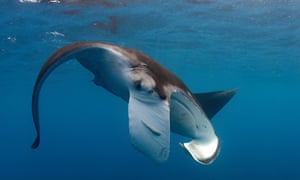
In 2016 a study was published on giant manta rays (Manta birostris), which explored the notion of whether these elasmo branchs could be classed as self-aware. Giant mantas have the largest brain of all fish species, as described by Ari in 2011; they often form large feeding aggregations, suggesting complex social interactions and are often referred to as intelligent. They were therefore seen as ideal candidates for investigating self-awareness.
For the study Ari and D’Agostino used the mirror self-recognition test (MSR), a method originally developed by psychologist Gordon Gallup in 1970 as a way to determine whether a non-human animal has the ability to recognise themselves. The MSR is considered a reliable behavioural index and has been used to prove self-awareness in the great apes (bonobos, chimpanzees, orangutans and gorillas), bottlenose dolphins, Eurasian magpies and Asian elephants.
In order to ascertain whether an animal can pass this test, researchers first expose the animals to a mirror. If they show social responses they likely perceived their mirror image as another individual and did not recognise themselves in the mirror. If they show repetitive and unusual movements they are considered potentially capable of passing the test. In the next phase researchers usually place a mark on the animal’s body (eg paint). They then observe what happens when the marked animal is placed in front of a mirror.
Animals that pass the test will typically adjust their positions so that they can get a better look at the new mark on their body, and may even touch or try to move it. Typically, they pay much more attention to the part of their body that bears a new marking.
Whilst no fish species has so far passed this type of test, studies have shown fish respond to their mirror images differently than they do to members of the same species. It is, however, worth mentioning that for some species of fish responses to olfactory cues may be a more appropriate test of self-recognition as opposed to the visually-biased MSR. A study by Thunken et al in 2009 investigated cave cichlids and found they had the ability to recognise their own olfactory cues.
In the Ari and D’Agostino study, due to the difficulties associated with marking a manta ray, observations were made instead in relation to mirror exposure only.
Results showed that the Mantas exhibited unusual and highly repetitive movements, exploratory, contingency checking and self-directed behaviour when exposed to the mirror. More specifically they gave selective attention to the mirror by displaying significantly more repetitive movements (very frequent cephalic fin movements) than under control conditions (observations made when no mirror was present) as well as several unusual behaviours, such as exposing and observing their underside in the mirror and bubble blowing, similar to what was observed when bottlenose dolphins were exposed to a mirror.
Mantas are also able to change their colour, rapidly increasing the intensity of their white markings when a new individual approaches (Ari 2014). This was not observed when they were exposed to the mirror, making it reasonable to assume that the animals did not perceive their mirror image as a new individual and that the observed behaviours were not part of normal social interaction.
Overall, Ari and D’Agostino’s study provides evidence for behavioural responses known to be prerequisites for self-awareness and which have been used by other researchers to confirm self-recognition in ape species.
Given that self-aware species are known to exhibit complex social behaviours, cooperative behaviours and empathic behaviours, this experiment and the other mentioned studies shine a light on the potential cognitive capabilities of fish and calls into question the ethical practices of current fisheries. The IU for the conservation of nature recognises the giant manta ray as a vulnerable species, with a decreasing current population trend.
Protection in some regions does exist and this species is listed on the Convention on International Trade in Endangered Species Appendix II, which restricts their trade. Despite this, up to 1,000 giant mantas are thought to be harvested from specific locations every year for their meat and gill rakers, the latter being traded as Chinese medicine.
I have been fortunate enough to dive with mantas in the Philippines and Maldives. Having seen these wonderful creatures at close quarters, I hope that studies such as the one described here will encourage further research and ultimately influence much-needed further protective legislation and policy in the near future.


Comments
Post a Comment